
Scars

The other day, I was listening to random songs on a music streaming app when a familiar one came on. As I sang along, I paid closer attention to the lyrics โ€” being present is my new thing, after all. One line caught me: โ€œI got a scar I can talk about.โ€

That lyric made me think about my own scars. First the physical ones, then the mental ones, and finally the life moments that have shaped me into someone different than I was before.


Physical Scars

Iโ€™ve only had two surgeries in my life: an appendectomy and bunion surgery. Both scars have healed, but every time I see them, Iโ€™m reminded of the pain before, the pain after, and how necessary those difficult days were to reach the comfort I feel now. Theyโ€™re small reminders that healing hurts โ€” but itโ€™s worth it.


Mental Scars

Iโ€™ve had a pretty darn good life. I grew up in a loving, close family. Iโ€™ve always had friends. I was raised with warmth and support. But even with a good life, certain moments leave marks.

One of my earliest mental scars came from a friend who told me she couldnโ€™t be my friend anymore โ€” for no reason at all. It took me forty years to understand that her actions had nothing to do with me. People donโ€™t intentionally exclude me. How others treat you and what they say about you is a reflection of them, not you.

Another scar came from a relationship that made me feel like I was losing my mind. I became convinced I wasnโ€™t normal, that something was wrong with me. I wanted so badly to be โ€œnormalโ€ โ€” to communicate well, to live without constant stress. In my search for clarity, I went to therapy. One day my therapist said, โ€œThere is nothing wrong with you. You are the most normal patient I have ever had.โ€

WOW.
You mean Iโ€™m not the angry one?
Iโ€™m not the one who canโ€™t communicate?
That relationships arenโ€™t 50/50 โ€” theyโ€™re 100/100?

A few days later, I was being yelled at for being angry when I hadnโ€™t expressed any emotion at all. I mentally stepped outside the moment, watching it like a fly on the wall. He was telling me how I felt โ€” but how could he know? I was the only one who could name my feelings. And in that moment, I wasnโ€™t angry. I wasnโ€™t upset. I was calm.

Yet there he was, red-faced, nearly exploding, desperate to provoke a reaction.

From that moment on, no one gets to tell me how I feel.


Life-Changing Moments

Have you ever been told youโ€™re not the same person you used to be? Have you ever felt it yourself?

In my early thirties, a friend moved in with me for a few months. She was an alcoholic. I had never lived with someone struggling like that. Watching her destructive behavior changed me. I remember sitting on my back porch wondering why I felt different โ€” why I wasnโ€™t as happy or giggly anymore. Seeing my best friend nearly kill herself forced me to grow up fast.

The next life-changing moment happened four years ago today. I had woven myself into so many lies and dug myself into so many holes that I finally hit rock bottom. At the time, I wanted nothing more than to disappear. I fantasized about my death and how people would react. But then I realized I would cause far more pain by leaving than by facing my demons and accepting the consequences I deserved.

So I made a commitment:
To start over.
To be 100% true to myself and to everyone around me.

I read over 200 books. I studied religious books. I watched people transform their lives and become honest with themselves. And I followed that path.


tRUE

The word tRUE became my motto โ€” a blend of true and rue.

  • True: Something that matches reality; genuine, accurate, loyal.
  • Rue: To feel sorrow, remorse, or regret about an action.

Because I felt deep remorse for my past actions, I promised myself I would be real and genuine moving forward.

And I have kept that promise.

I am not the same person I was four years ago โ€” thank goodness. During the hardest two and a half years, I kept daily journals. I still reread them to remind myself of my struggles and my growth. Every action Iโ€™ve taken since then has been intentional. I understand the consequences of my choices. I allow myself to be different from others. I allow myself to be imperfect.

And I have never been happier being 100% tRUE.

Understanding Vanity, Ego, and Genuine Self-Acceptanceย 

Stepping outside, I am greeted by the unmistakable sound of a middle-aged woman singing karaoke in her garage across the street. Her voice echoes through the neighborhood, and I can’t help but wonder if she realizes how far her performance carries. Does she know the entire block can hear her? Perhaps she believes she has real talent; after all, don’t we all tend to overestimate our own abilities? 

We often claim to be humble, yet secretly, we are convinced that others are constantly talking about us. There is a persistent belief that everyone cares deeply about our appearance at any given moment. The reality, however, is much different: people are primarily concerned with themselves. Our egos drive us to think we are the center of attention, reminiscent of the famous song lyric, โ€œYouโ€™re so vain, you probably think this song is about you.โ€ 

Itโ€™s almost comical how we imagine that every person in the grocery store is waiting for us to arrive, eager to see our outfit and how we styled our hair and makeup. We act as if we are the reason everyone else decided to get out of bed that morning. This mindset is clearly unrealistic, yet it persists. 

Reflecting on childhood, it becomes apparent that our priorities were once different. Comfort was paramount; the only concern about an outfit was whether it allowed us to climb the jungle gym or jump rope with ease. At some point, though, we are taught to become more self-conscious, convinced that we are on a pedestal and everyone is watching, judging what we wear, say, and do. 

Unless we are professional athletes or movie stars, the truth is that most people do not care about us or our choices. This begs the question: why do we care so much about celebrities? Perhaps it is because we compare ourselves to them, building them up only to tear them down. By highlighting their flaws, we make ourselves feel better, forgetting that their success is the result of hard work and determinationโ€”qualities we may not have been willing to pursue ourselves. 

Yet, beneath this fascination with others, there lies a missed opportunity to redirect our attention inward and cultivate genuine self-acceptance. Instead of fixating on the perceived gaze of the world or the exploits of distant celebrities, we might find greater peace by embracing our own quirks and imperfections. Imagine the freedom in living authentically, without the weight of imagined scrutiny or the urge to measure up to standards set by strangers. In learning to release these self-imposed expectations, we open space for more meaningful connectionsโ€”with ourselves and those around usโ€”rooted not in comparison, but in understanding and appreciation. 

By letting go of the illusion that we are constantly under a spotlight, we start to recognize the value of quieter moments and the richness of everyday experiences. The truth is, when we release the pressure to perform for an imaginary audience, we grant ourselves permission to make choices that are true to our desires rather than dictated by external expectation. In this space, self-worth becomes less about comparison and more about authenticity, allowing us to nurture a confidence that isnโ€™t dependent on fleeting validation but is rooted in genuine self-respect and personal growth. 

Embracing Authenticityย 

In recent months, I have made a conscious effort to apply these reflections to my own life. Choosing to let go of the pressure to conform to othersโ€™ expectations has been an incredibly liberating experience. This newfound freedom has allowed me to focus more deeply on the person I truly want to become, rather than shaping myself according to what others might desire or expect from me. By centering my actions and self-perception on my own values, I am gradually discovering a more genuine sense of self and purpose. 

The Power of Religion in Prison

I have always been a spiritual person, but organized religion never appealed to me. Growing up in a religious family and community where over 90% of the people belonged to the same church, I had little exposure to other religions. This limited perspective led to a biased view. In college, a religious studies class further solidified my skepticism towards organized religion, as it delved into the origins and diverse beliefs of various faiths.

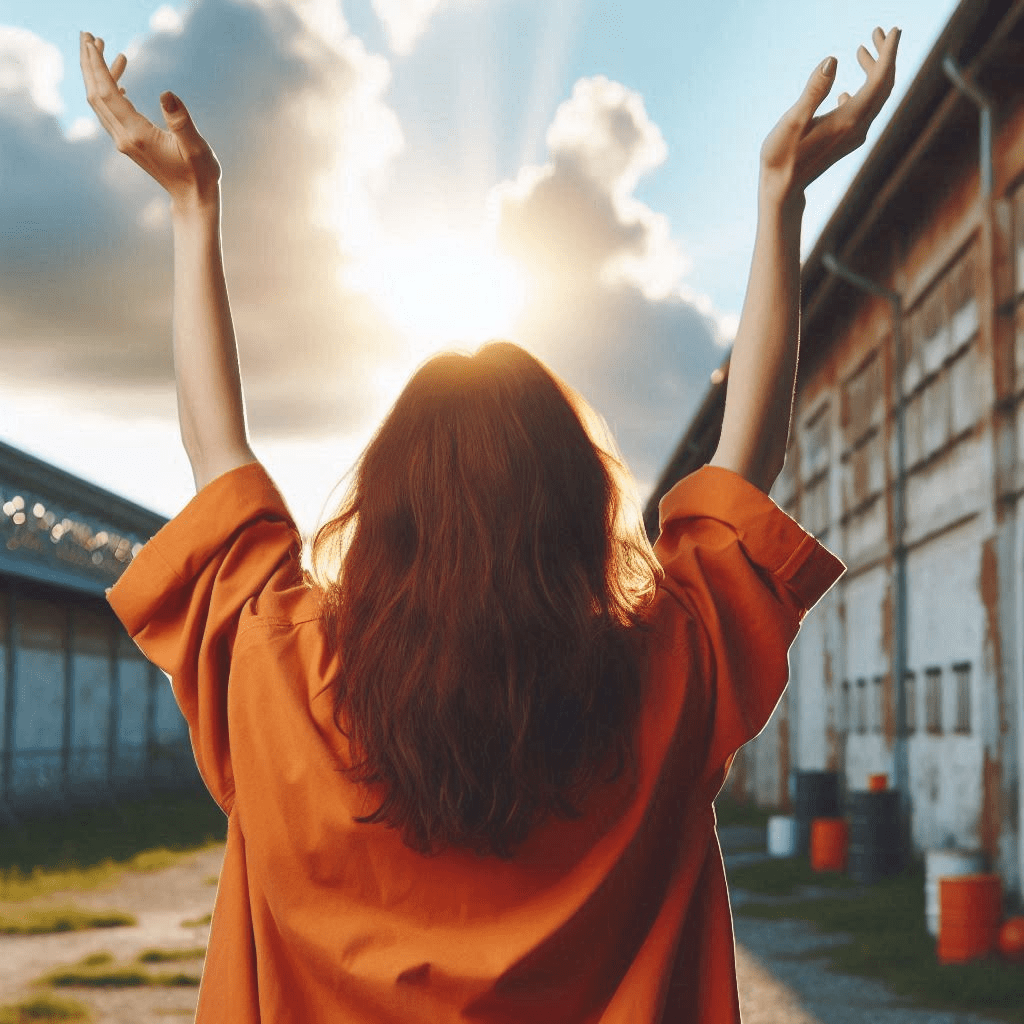
Fast forward thirty years, and I found myself incarcerated with women who, by all accounts, should have no interest in religion. The common perception is that prison equates to evil, suggesting a pervasive presence of negativity. However, I was astonished to discover that prison was one of the most spiritual places I had ever been. In a place where hope seemed lost, where lives were disrupted, and where families and friends had often abandoned them, religion provided a beacon of hope.

In prison, no one was judged for reading faith-based books or attending religious services. Whether it was Catholic, Christian, Seventh-day Adventist, or Muslim services, women attended to find solace and hope. For many, God was the only source of hope they had left.

One afternoon, while sitting under a tree, a woman mentioned she was going to Catholic services to partake in communion. This sparked a conversation about our diverse religious beliefs, and someone remarked, โ€œI have never felt the spirit more strongly than I feel it here.โ€ It wasnโ€™t about a specific religion; it was about the freedom to worship in a way that brought hope, without judgment. Watching TBN or spending hours reading scriptures was respected and understood as a necessity during that time in our lives.

I realize that many people leave prison and never attend church or read the Bible again. But for some, the experience is transformative. Their transformation behind prison fences may inspire others, creating a chain of hope that extends beyond the prison walls. Access to a variety of religious materials in prison is as crucial as educational resources. It was the key to my success, and I witnessed its impact on many women. If my life was changed, imagine how many others could be transformed with access to religious materials.

How can we ensure that prisons continue to receive a diverse range of religious materials? Have you ever experienced spiritual influence in an unexpected place?

Remember The Inherent Worth of Every Individual

From the moment I saw her, I felt an instant dislike. She had a rugged appearance, with tattoos covering her face, neck, and arms. Her walk exuded a cockiness that made it clear she wouldnโ€™t take nonsense from anyone. She spent her time smoking and asserting her powerful presence in the yard.

Whenever I encountered a new inmate, my first thought was always, โ€œWhat did they do to end up here?โ€ My initial assumptions were usually โ€œdrugsโ€ or โ€œDUI.โ€ However, as I got to know more about people, I realized their stories were often much more complex.

One woman was in for theft and trespassing after living in a deceased manโ€™s house for over a year. His family, who lived out of state, were waiting for the courts to settle his estate before putting the house on the market. In the meantime, the fully furnished house sat vacant. She knew about his family situation and decided to move in. While living there, she found a collection of rare coins, which she pawned to buy groceries. Another woman was in for arson after setting her condescending bossโ€™s house and cars on fire in an act of revenge.

However, most of the women I met had done things many others have done โ€“ shoplifting a shirt, driving home from happy hour buzzed, or falsely applying for unemployment and food stamps because their current jobs didnโ€™t pay the rent. They just happened to be the unlucky ones who got caught. Regardless of the cause, guilty or innocent, during my stay, I realized that every single person means something to somebody.

One day, as I was returning from work, the gate officer was letting a family in for a weekday visit. We stood in line patiently, waiting for the guests to be processed. Soon, a little boy, about four years old, came running through the gates toward the visiting area. He was yelling, โ€œMom! Mom! Iโ€™m here! I finally get to see you! Mom! Itโ€™s me, Iโ€™m here!โ€ He was calling for his mother, whom he hadnโ€™t seen in who knows how long. He was so excited that he couldnโ€™t hold back, even though she was inside and couldnโ€™t see or hear him. All of us witnessing this tender moment couldnโ€™t help but shed some tears. The reunion hit home for all of us who were missing our families and friends. After a couple of minutes, his mother came out of the visiting area door โ€“ it was the rugged lady I had assumed was just a nobody acting tough for attention. However, she was a mother, loved, missed, and needed by this little boy.